
The Central Board of Indirect Taxes and Customs (CBIC) has issued new guidelines for GST officers, mandating year-wise demand breakdowns in multi-year notices, clarifying registration procedures, and streamlining export rules to reduce litigation and improve taxpayer clarity.

CERT-In has issued several advisories warning against AI agents going rogue and cases of open-source agentic AI tools being used to survey and attack.

The goal is to ensure that your bank works for you, providing liquidity and convenience without charging you for the privilege of holding your own money.

Delhi Police have arrested two men in Mathura for allegedly operating a cyber fraud scheme that used fake health camps to collect Aadhaar and biometric details from villagers. These details were then used to activate over 3,000 e-SIM cards, linked to frauds worth Rs 2.64 crore. The accused sold activated e-SIMs for profit, with payments made via cryptocurrency.

Becoming wealthier isn't only about earning more money. Sometimes, it starts with stopping the money you already earn from quietly disappearing.

Financial Intelligence Unit-India (FIU-IND) has imposed a Rs 5.49 crore penalty on Paytm Payments Bank for violating anti-money laundering rules, the Finance Ministry said on Friday. FIU-IND initiated a review of Paytm Payments Bank on receipt of specific information from law enforcement agencies in respect of few entities and their network of businesses engaged in a number of illegal acts, including organising and facilitating online gambling.

Gurugram police have arrested two individuals, Nirmal Kumar and Gopi Kumar Yadav, for their involvement in a cyber-fraud scheme. The gang allegedly duped people by sending fake HCG bill messages and using malicious APK files to steal Rs 1,64,900 from a complainant's bank account. The arrested associates were responsible for fraudulently obtaining and supplying SIM cards used in the crime.

Delhi Police have arrested three individuals in two separate commercial fraud cases totalling Rs 62.68 lakh. Two accused allegedly defrauded garment suppliers of Rs 45 lakh, while a third cheated a medical supplies firm of Rs 17.68 lakh using fabricated bank transfer screenshots. Investigations are ongoing, with links to other cases being examined.

Goa Police have arrested two men, Sagar Prakash Dholvi and Ajinkya Ravindra Abhang, from Maharashtra for allegedly defrauding a senior citizen of Rs 39.01 lakh through a fraudulent online investment scheme. The accused lured the victim via WhatsApp, showed fictitious profits, and then stopped responding after demanding more payments. Police have secured Rs 23.12 lakh belonging to the complainant and advise caution against such schemes.

Choose a car loan that fits your budget, keeps EMIs manageable and saves you money on interest, not just one with attractive festive offers.

The Economic Offences Wing of the Jammu and Kashmir Crime Branch has filed a chargesheet against Sajad Abdullah and Jahangir Ahmad Tanky for allegedly duping individuals by promising lucrative overseas employment. The accused, operating M/s Al-Aqsa Global Services Pvt Ltd, collected over Rs 15 lakhs but failed to provide jobs, with refund cheques bouncing. The investigation revealed the consultancy was not registered for overseas recruitment.

Finance Minister Nirmala Sitharaman clarified that the proposed Merchant Discount Rate (MDR) on select high-value UPI transactions is not a tax or cess, and its collections will not go to the government. She explained that MDR is a charge within the digital payments ecosystem, shared among participants to maintain infrastructure, and will not be passed on to consumers. The NPCI's new framework, effective October 15, applies a 0.4% MDR on person-to-merchant UPI transactions above Rs 2,000, with most transactions remaining free and small merchants exempt.

The Reserve Bank of India's recent measures, including a dedicated dollar window for state-run oil marketing companies and tightened foreign exchange derivative rules, are expected to provide near-term relief to the rupee's depreciation, but market participants believe global factors and balance of payment dynamics will continue to exert pressure in the medium term.

RBI Governor Sanjay Malhotra reiterated India's cautious stance on cryptocurrencies due to concerns over monetary sovereignty and capital flows, while actively promoting underlying technologies like distributed ledger technology and tokenisation. He also addressed the global rise in public debt and hardening bond yields, attributing it to increased government and private spending, including that driven by AI, and noted the implications of global interest rates on India's monetary policy.

The RBI on Friday asked Paytm Payments Bank to stop opening new accounts amid "material supervisory concerns" observed in the bank. "Reserve Bank of India has today, in exercise of its powers, inter alia, under section 35A of the Banking Regulation Act, 1949, directed Paytm Payments Bank Ltd to stop, with immediate effect, onboarding of new customers," the central bank said in a statement. The bank has also been directed to appoint an IT audit firm to conduct a comprehensive system audit of its IT system.

India's balance of payments (BoP) recorded an $8.1 billion deficit in the first quarter of 2026-27 (Q1FY27), a significant increase from a $4.5 billion surplus in the corresponding period of the previous year, primarily driven by a sharp reversal in portfolio flows.
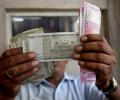
Government sources clarify that the 0.4% merchant discount rate (MDR) on UPI transactions above Rs 2,000, effective October 15, will not be passed on to consumers. The charge, paid by merchants, aims to create a sustainable revenue framework for the digital payments ecosystem, with funds shared among banks and UPI entities. Small merchants using QR codes for up to Rs 1 lakh monthly are exempt.

This means individuals like Vikram Pandit, former Citibank chief, can be a promoter only if he comes back to the country permanently.

Property ownership disputes depend on the registered deed, the parties' intentions, financial contributions and available evidence.

Economic think tank GTRI has urged the Indian government to withdraw the proposed UPI charges, set to begin on October 15, arguing that the digital payment system should remain free for merchants and consumers. GTRI warns that these charges could lead to higher prices, reduced earnings for small businesses, and weakened household demand, while also benefiting international card networks by eroding UPI's price advantage. The think tank also called for an independent audit of UPI's running costs.

A savings or current account with no customer-induced transaction for more than 24 months is classified as inoperative.
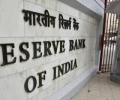
Focus to be on unbanked areas; initial capital is set at Rs 100 crore; India Post can apply.

The RBI has created a stunted business model by which payment banks are supposed to shoulder the noble objective of financial inclusion without being able to make much money.

DBS Bank India has launched a direct tax payment facility after authorisation from the Central Board of Direct Taxes (CBDT). Utkarsh Small Finance Bank partners with Mumbai Indians as banking partner for T20 League 2026.

The Delhi Police's Financial Monitoring Cell prevented potential losses of Rs 1.53 crore in "digital arrest" scams across five states. Their Proactive Victim Identification and Protection Team intervened to save multiple victims, including senior citizens, from transferring additional money to fraudsters who impersonated officials and threatened arrest for fabricated crimes.

All 'grameen dak sevaks' in rural post offices will be given handheld devices by March 2017.

Fake web sites, counterfeit goods, bogus delivery charges and fraudulent customer support agents are common warning signs.

75% of India's 60 million digital-payment merchants have never recorded a transaction above 2,000.

Keralam police have issued a public caution against cyber fraudsters who use fake customer care numbers of banks and e-commerce platforms to deceive individuals and steal their personal and financial information. Fraudsters post fake numbers online, then contact victims posing as support agents, asking them to install remote access apps or make small payments to gain access to sensitive data.

Punjab & Sind Bank MD and CEO Swarup Kumar Saha clarified that merchants cannot pass on Merchant Discount Rate (MDR) charges to customers for UPI payments, ensuring consumers only pay the displayed price. The new MDR structure, effective October 15, applies a 0.4% charge on P2M transactions above Rs 2,000, with specific flat rates for certain sectors, but small-value transactions remain free.

The Indian government has mandated that banks and payment providers cannot levy charges on UPI transactions up to Rs 2,000 or on payments made via RuPay debit cards. This directive follows an amendment to the Payment and Settlement Systems Act, 2007, aiming to sustain and expand the digital payments ecosystem.
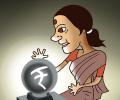
The Reserve Bank of India (RBI) has endorsed the introduction of a Merchant Discount Rate (MDR) on UPI transactions exceeding Rs 2,000, effective October 15. This move, which levies a 0.4 per cent fee on merchant payments above the threshold, aims to bolster the long-term sustainability and growth of India's digital payments ecosystem. The RBI clarified that person-to-person (P2P) transactions and small person-to-merchant (P2M) payments below Rs 2,000 will remain free for users, ensuring no direct charge on customers.

The Supreme Court has refused to grant an interim stay on the imposition of Merchant Discount Rate (MDR) on UPI person-to-merchant transactions exceeding Rs 2,000, which is set to take effect from October 15. The court has agreed to examine the challenge to this new fee and has issued notices to the Centre, RBI, and NPCI, seeking their responses within four weeks. A Public Interest Litigation (PIL) argues that the levy lacks statutory safeguards, transparency, and public consultation, and could adversely affect merchants and consumers.

'Existing borrowers who have surplus cash should make partial loan prepayments to offset the impact of rising EMIs and reduce the overall interest burden.'
The Kerala Legislative Assembly has passed a motion urging the central government to completely withdraw the proposed Merchant Discount Rate (MDR) on UPI transactions exceeding Rs 2,000. Chief Minister V D Satheesan and CPI MLA K Rajan highlighted concerns that the MDR would increase business costs, harm small businesses, and reduce the appeal of digital payments, while the BJP argued it would not affect general public or small merchants.

The Indian government has introduced a 0.4 per cent Merchant Discount Rate (MDR) on UPI payments exceeding Rs 2,000 made to merchants, effective from October 15, with a comprehensive framework set to take full effect by October 15, 2026. This policy aims to regulate transaction fees while protecting small merchants and person-to-person transactions.

Nandan Nilekani, co-founder of Infosys, has urged for the expanded adoption of the Account Aggregator (AA) framework to facilitate formal credit access for self-employed individuals and gig workers. He highlighted its potential to enable cash-flow-based lending by leveraging diverse data streams, moving beyond traditional asset-based lending, and fostering a more inclusive digital financial infrastructure in India.

Rajasthan Police arrested Wasim Hussain in Gurugram for his alleged role in a cyber fraud case. A Jaipur resident was swindled out of Rs 22 lakh after fraudsters, posing as an American citizen, promised a job abroad for his son and demanded various clearance fees. Hussain allegedly provided mule bank accounts used to receive part of the defrauded amount.
The Congress party has questioned the Modi government's decision to defer the Merchant Discount Rate (MDR) on UPI transactions, alleging a potential "U-turn on the U-turn." Congress general secretary Jairam Ramesh highlighted previous denials by the finance minister regarding MDR imposition, only for it to be announced later and now deferred. He expressed concerns about future charges on UPI transactions.

BJD MP Santrupt Misra has voiced strong concerns over the Centre's decision to impose a 0.4 per cent Merchant Discount Rate (MDR) on UPI transactions above Rs 2,000, arguing that the government or large financial institutions could easily absorb the costs of maintaining the digital payment network instead of burdening merchants and consumers.
